MODERN ENGLISH LITERATURE: AN OVERVIEW
I am hereby borrowing a fellow teacher's words.
Many thanks to William Mallinson
We kick off with two superb dramatists and writers, Oscar Wilde
(1854-1900) and George Bernard Shaw

(1856-1950). Wilde was quintessentially Irish in wit, humour, verbal prowess, blood, and origin, yet, having studied at Trinity College Dublin and then Oxford, was very ‘English’ in a pleasantly louche, supercilious and upperclassish way. In contrast, Shaw was an Anglo-Irish Protestant, morally, socially and politically conscious, even being a founder member of the Fabian Society. He was also self-taught, having left school at the age of fourteen. Their differences are reflected in their work, although their pithiness unites them. Wilde is perhaps best known for ‘Picture of Dorian Gray’. Grey leads a life of debauchery, while remaining handsome and in good shape. But his portrait becomes increasingly corrupt and horrid: it represents his soul. The ending is pretty horrific. There is of course more to the book than just that, and although it is a superb work, I wouldn’t recommend it to adolescents! In the preface Wilde writes; ‘There is no such thing as a moral or immoral book. Books are well written, or badly written.’ In other words, he seems to be saying that art is for art’s sake. Another of his well-known works is the play, ‘The Importance of being Earnest’, from which we have the gem: ‘Really, if the low orders don’t set us a good example, what on earth is the use of them?’ Shaw found the work hateful and sinister, exhibiting ’real degeneracy’. In this connexion, on the other hand, Wilde said of Shaw: ‘He hasn’t an enemy in the world, and none of his friends like him.’ Other witty Wilde sayings are: ‘Modern journalism justifies its own existence by the greatest Darwinian principle of the survival of the vulgarest.’; ‘A cynic: a man who knows the price of everything and the value of nothing.’; ‘I can resist anything except temptation.’; and ‘When good Americans die, they go to Paris.’. Wilde’s wild life seems to have led to a tragically early demise, not as early as Mozart, but still premature: he sued the father of a poet friend of his, Lord Alfred Douglas, for libel, for accusing him of performing sodomy with his son (the poet). Wilde lost the case, was arrested, and sent to Reading Gaol for two years, for sodomy. He then left for Paris, changing his name to Sebastian Melmoth, dying two years later. Was he Dorian Gray? Was he a homosexual? Having read ‘De Profundis’ (which he wrote in prison) I can find no forensic evidence of his admitting to having actually practiced pillow-biting and shirt-lifting, but then perhaps he was a teaser. Well, perhaps he had certain tendencies towards young men, but the question is whether it was right to send him to gaol. I leave this to your judgment. It is not an easy question, since one needs to look at the morality of the Victorian Age, which some say had an element of hypocrisy: sometimes, those who persecute people manically and morally for something, are trying to hide their own tendencies, even from themselves…. At any event, having run out of cash, and written ‘The Ballad of Reading Gaol’, this former witty wordsmith par excellence said not long before he died: ‘I shall have to die beyond my means.’ He left a wife and two children, for whom he had written a lovely, but slightly frightening book of tales. How great would he be today, had he lived to Shaw’s age? He is great enough, as it is.
Shaw, perhaps somewhat more mature emotionally than Wilde, and surely a decent enough chap, was, like Wilde, healthily critical of people, but more as members of what we term ‘society’. Thus, in his plays, he criticized, inter alia, slum landlords and private doctors. In the preface to ‘The Doctor’s Dilemma’, he writes: ‘Thus everything is on the side of the doctor. When men die of disease, they are said to die from natural causes. When they recover (and they usually do), the doctor gets the credit of curing them.’ His play applies very much to today. Shaw was also an expert on class. If you wish to gain some insight into class and accent in England, you should red ‘Pygmalion’. If you wish to understand something about the England-Ireland problem, you can read ‘John Bull’s other Island.’ Some memorable sayings from Shaw are: ‘We have no right to consume happiness without producing it than to consume wealth without possessing it’; ‘He knows nothing; and he thinks he knows everything. That clearly points to a political career.’; and ‘ He who can, does. He who cannot, teaches.’ I escape this definition, since I do not teach, but try to help students to learn. He comments on the English were cutting; for example: ‘A person who thinks he is moral when he is only uncomfortable.’
Our course then rushes through John Galsworthy
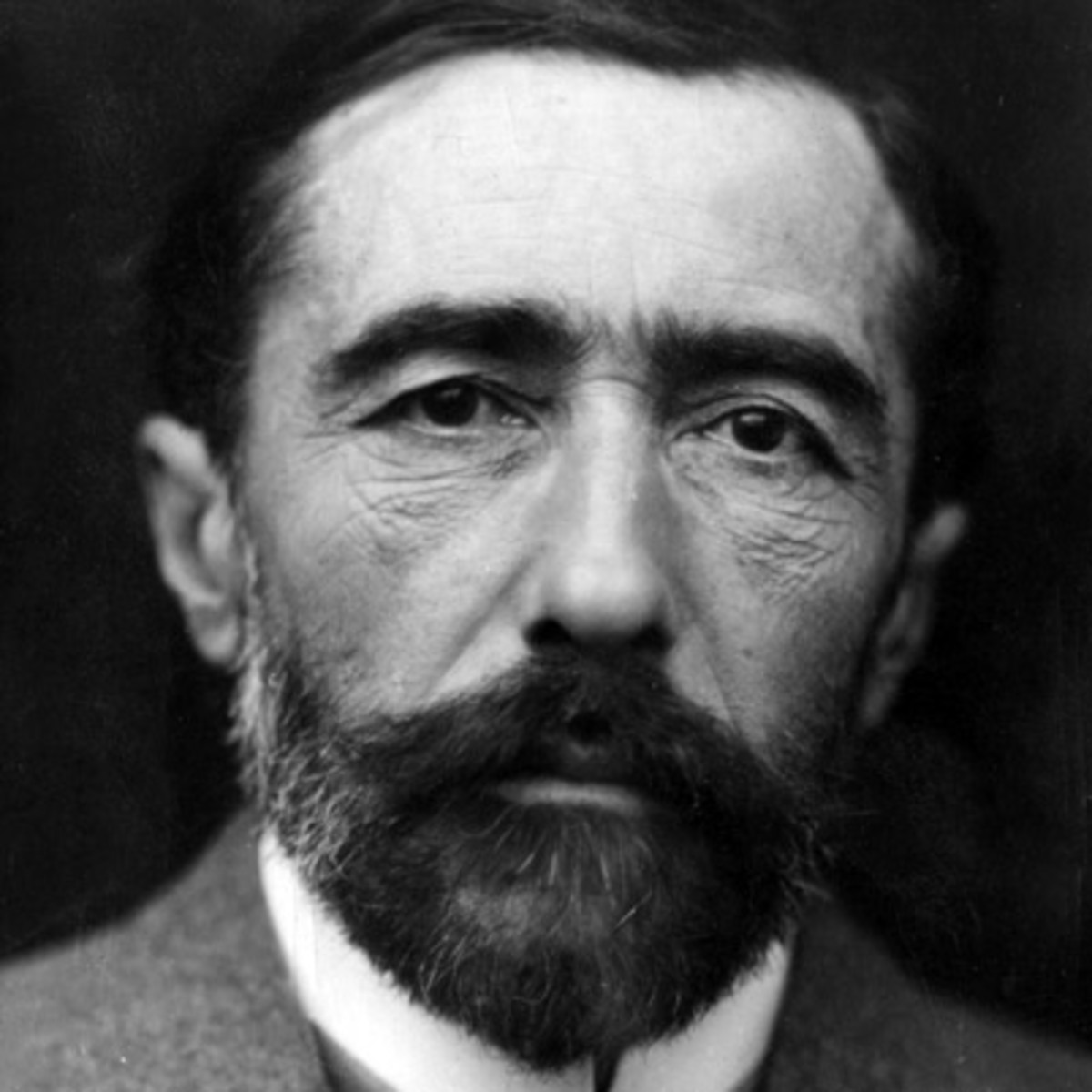
Joseph Conrad (not even British-born)
and T.S. Eliot
This highly educated chap is known, inter alia, for ‘Old Possum’s Book of Practical Cats’. He wrote the play ‘Murder in the Cathedral’, a very good theatrical adaptation of the murder of Archbishop Thomas Becket. One of my favourite quotes of his, from ‘The Rock’, is: ‘Where is the wisdom lost to knowledge, where is the knowledge lost to information and where is the word we lost in words?’
After a brief glimpse of the amazing American Ezra Pound

who found Europe and Italy in particular, more to his liking intellectually than the USA, we come to William Yeats (1865-1939).
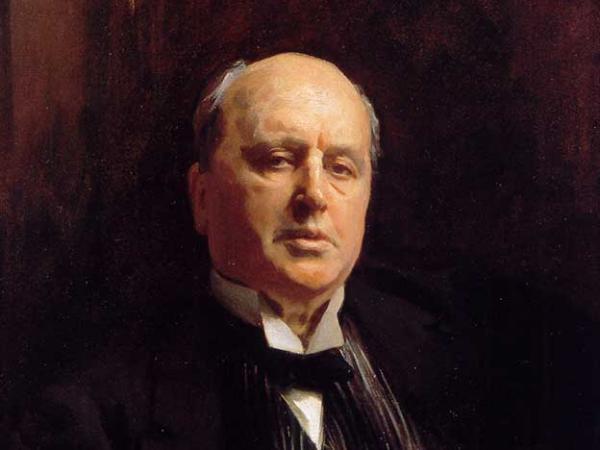
He is the quintessential Celtic Irishman, a friend of Shaw and Wilde, and a good dramatist and poet. ‘The Celtic Twilight’, a collection of traditional Irish stories, is a good pointer to Yeats’ thinking. Jumping now to Henry James (1843-1916),
an American who, unlike many, preferred to settle in London rather than Paris, we see a man who could pick up the apposite word with the point of his pen, in a meticulous fashion. I find his style too precise for my liking, the very antithesis of ‘stream of consciousness’ writing. Nevertheless, he was a competent writer. ‘The Turn of the Screw’ is a good ghost story.
Thomas Hardy (1840-1928)
a giant in English literature, is worth chubby paragraph.
A poet who wrote novels, he was born to a modest family (his father was a stonemason), trained as an architect, but returned to his beloved Wessex to write. Beautifully written, his novels can be quite pessimistic: ‘Tess of the D’Urbervilles’ ends with the heroine’s execution for stabbing her husband to death, a husband whom she was emotionally pressurised into marrying, although she loved another. ‘Jude the Obscure’ ends with three children hanging dead behind a door, on clothes hooks. His stories often bring out what he saw as the injustice of the divorce laws, especially for women who had married the wrong man, and were then trapped in their marriage, and how they and their lovers were then ostracized by society. His writing was sensitive, and some of his descriptions of nature in his beloved Wessex are touching.
We now look at three childrens’ writers, Lewis Carroll
(real name Charles Lutwidge Dodgson, an Oxford mathematician, non-practising Anglican deacon, and photographer, 1832-1898),
Kenneth Grahame (1859-1932)
, and Beatrix Potter (1866-1943),

Few have not heard of Carroll’s ‘Alice in Wonderland’ and ‘Through the Looking-Glass and what Alice found there’, both of which are intriguing fantasies, almost making imagination real. From the latter, we have the memorable quote: ‘The question is’, said Alice, ‘whether you can make words mean different things.’ The question is, said Humpty Dumpty, ‘which is to be master, that’s all.’ It was rumoured that he had a not wholly healthy interest in young girls, although there is not a jot of evidence that he ever did anything untoward. From Alice’s fantasy world, the Scotsman Kenneth Graham takes us to the fantasy world of little animals, with ‘The Wind in the Willows’, written to his son. We see the daily lives of the toad, the badger, rat and mole in a typical English country setting. Beatrix Potter also wrote short books about animals, illustrating them herself. Of note are ‘The Tale of Peter Rabbit’ and the ‘Tale of Mrs.Tittlemouse. She spent most of her later life in the Lake District, the most beautiful part of England. This had a kind effect on her writing.
Moving now to more social and even sexual themes, we come to D.H. (David Herbert Richard) Lawrence (1885-1930).
This man got through the bone to the marrow of passion, love and sex. His quintessential book is ‘Lady Chatterley’s Lover’, a story of illicit love, passion and unadulterated sex between the upper-class wife of an impotent aristocrat and the gamekeeper. Lawrence left England, and the book was published in Florence, not appearing in England until 1961, following a sensational obscenity trial. Lawrence wrote other books, such as ‘Women in Love’ and ‘Sons and Lovers’. He is very perceptive, revealing the real, rather than the politically correct and sanitised nonsense of hypocrisy. We can connect this to the English people’s dislike of being obvious, particularly when it comes to sex, and their embarrassment of sexual matters, often expressed in crude jokes.
Now back to the Irish: James Joyce (1882-1942)
was another of those linguists who chose Paris. His most well-known work is ‘Ulyses’, an example of his so-called ‘stream of consciousness’ writing, which tries to catch one’s deepest thoughts and imagination on paper, a kind of interior monologue. As such, it is naturally unstructured. ‘Ulyses’ deals with a day in Dublin, and a whole gaggle of characters. ‘Finnegan’s Wake’ is another example, and has been linked to Giambattista Vico’s ‘New Science’, which contains a good deal about the origins of language. Joyce certainly pushes written language to its limits. In contrast, his ‘Dubliners’, a series of short stories about life in Dublin, is surprisingly prosaic in style. He influenced another Irishman, the playwright Samuel Becket (1906-1989),
another linguist residing in Paris, best known for ‘ En attendant Godot’, written originally in French. The gripping play ends without Godot arriving.
Let us now spare some thought for the wonderful and tragic Virginia Woolf,
known in particular for ‘To the Lighthouse’, ‘The Waves’, ‘Orlando’ and ‘Mrs. Dalloway’. As with Joyce, we see a certain amount of internal dialogue. Woolf was a leading light of the ‘Bloomsbury Group’, named after the area of London in which it met. She has also been seen as a feminist, having written : ‘A woman must have money and a room of her own if she is to write fiction’. But does this not also apply to men? It is up to you to decide, by reading some of her work, whether or not she was a feminist. She is said to have had mental problems. At any rate, she drowned herself in the Thames.
Back now to the men. Aldous Huxley (1894-1963)
is best known for ‘Brave New World’ (1934), a particularly negative critique of the future, where Britain is a wasteland of human ‘robots’ and scientific breeding (he virtually predicted test-tube babies), with subordination the ideal of happiness. He developed the theme in 1959, with ‘Brave New World Revisited’. At any rate, he is relevant today, as is the inimitable literary giant George Orwell (1903-50),

whose real name was Eric Arthur Blair. His ‘1984’, published in 1948, predicts a future where the world is divided into huge power blocks, and where people are run on government propaganda. Wherever you live, ‘Big Brother’ watches you from a television screen, and so help you if you say anything against the government, or even try to have a loving relationship with someone. As for the Ministry of Truth, it is based on lying. ‘Animal Farm’ is an attack on communist totalitarianism. After Eton, Blair became a colonial policeman in Burma (he was born in Bengal), an experience which made him critical of the British Empire. ‘Burmese Days’ is a novel which brings out the hypocrisy of empire, and how social class mattered, in a story of unrequited love. Orwell was also a good short story writer. ‘Shooting an Elephant’ brings out the relationship between rulers and ruled, while ‘A Hanging’ is horrific in its detail. Orwell fought in the Spanish civil war, and wrote a very perceptive – if occasionally pedantic - book about the details of the conflict. He also spent several months living as a casual worker in London and Paris, working mainly as a dishwasher. He then produced a highly entertaining book, ‘Down and out in London and Paris’. Here is an example of his writing, from ‘England, your England’: ‘As I write, highly civilised human beings are flying overhead, trying to kill me. They do not feel any enmity against me as an individual, nor I against them. They are only “doing their duty”, as the saying goes. Most of them, I have no doubt, are kind-hearted law-abiding men who would never dream of committing murder in private life.’ Like several writers, Orwell was also a journalist. We cannot end without mentioning his essay ‘Politics and the English Language’, a highly entertaining but effective lambasting of the influence of political ideology on the English language, and very relevant today, with the erosion of clear English through computer language, sloppy education and political correctness.
From Orwell, we turn now to two children’s writers, although their books are also appropriate for adults. The South African J.R. Tolkien (1892-1973),
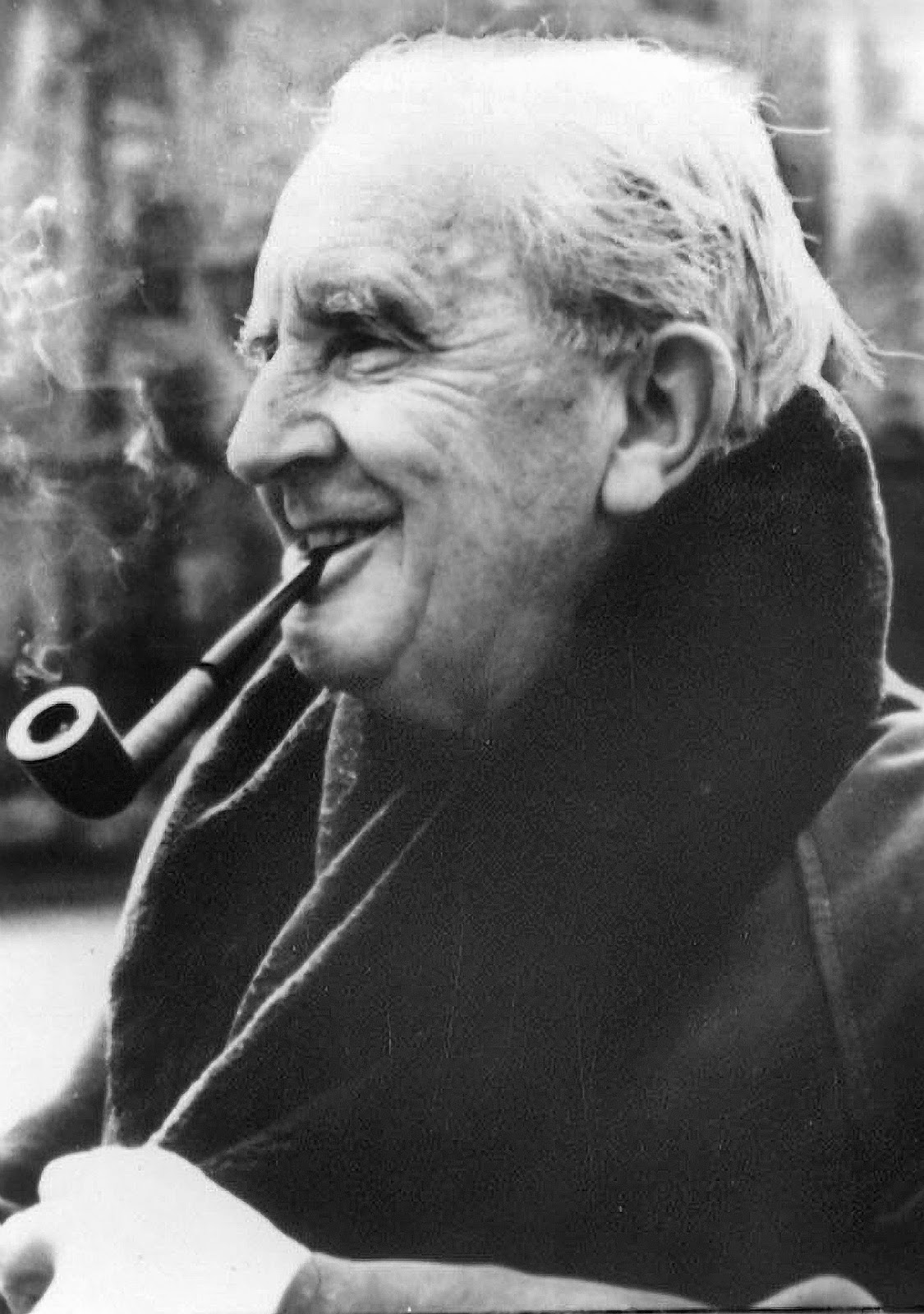
Professor of Anglo-Saxon at Oxford, is most well known for ‘Sir Gawain and the Green Knight’, ‘The Hobbit’ and ‘Lord of the Rings’, adventure stories laden with fantasy and drawing on Tolkien’s knowledge of the Celts. If I compare Tolkien to Rowling’s ‘Harry Potter’, the latter catapults itself out of existence. Roald Dahl (1916-1990)
is also a wonderful writer, primarily but not exclusively for children. Born in Wales of Norwegian parents, his daughter was once one of the girlfriends of a cousin of mine. He wrote a series of short stories, ‘Tales of the Unexpected’, so gripping that they were serialised on television. Each story ends with a twist. Although they are for adults and older children, ‘Charlie and the Chocolate Factory’ is definitely for young people. ‘My Uncle Oswald’ is also an amusing book.
So we come to a mammoth of English literature, William Somerset Maugham (1874-1965).

Born in Paris, where his father was a legal adviser, hiss mother died when he was eight years of age, and his father two years later. He was sent to live with an uncle, the Vicar of Whitstable, apparently a cold character, and then attended King’s School, Canterbury, left early, and studied literature, philosophy and German at Heidelberg, ending up studying medicine at St.Thomas’ Hospital in Lambeth, London, where he qualified as a doctor. His second book, ‘Lisa of Lambeth’ (1897), a story about working-class adultery, sold so well that Maugham became a full-time writer, moving to the south of France in 1928, around the time of his divorce (it is said that he had rather special relationships with various males). We cannot of course mention all his books (he even wrote some popular plays), but of note are: ‘Of Human Bondage’, autobiographical in nature, ‘Ashenden’, about a secret agent, and four volumes of very entertaining short stories, of which my favourite is ‘Salvatore’. Maugham was certainly a pretty rum character, and was good at irritating people, in particularly those whom he almost libeled in some of his books. For even if he did not mention real names, it was sometimes fairly obvious whom he meant. The following quote reveals some of Maugham’s sometimes bitter-sweet powers of describing people: ‘When she reddened, her pasty skin acquired a curiously mottled look, like strawberries and cream gone bad.’
Wending our way towards the writers of thrillers, I shall touch on only four, although there is a whole bevy of them. Graham Greene (1904-91),
who converted to Rome in 1926, was educated at Oxford, and worked for British Intelligence for a while. His thrillers are gripping, and delve deep into morality. One of his best thrillers, the ‘Human Factor’, is based on espionage, as is ‘Our Man In Havanna’. Other superb books are books are ‘The End of the Affair’, ‘The Honorary Consul’ and ‘Ministry of Fear’. John Le Carré (1931- ),

whose real name is David Cornwell, is still going strong. After Oxford, he taught at Eton for two years, and then worked for MI5 (which handles, along with the Police’s Special Branch, internal security, but often has rows with MI6 about responsibility for Northern Ireland, because of the connexions with the Republic of Ireland). His espionage thriller ‘The Spy who came in from the Cold’, won him worldwide fame, and was made into a very good film. It brought out the reality of intelligence work, the drudgery and the mutual suspicions that abound in the incestuous world of institutionalised spying. Some of his other books are ‘Smiley’s Circus’, ‘A Small town in Germany’, ‘A Perfect Spy’ and ‘The Constant Gardener’ which, despite the alleged end of the Cold War, is as thrilling as ever, questioning the morality of big business. To get a sense of his style, here is the beginning of ‘A Small Town in Germany’: ‘Ten minutes to midnight: a pious Friday in May and a fine river mist lying in the market square. Bonn was a Balkan city, stained and secret […].’ In juxtaposition, Ian Fleming (1908-1964),

author of the extremely well-known Bond novels, emphasises, perhaps a mite too much, the more glamorous aspects of the job, but nevertheless remains plausible. He was in British Naval Intelligence for a while. Then we should mention Len Deighton (1929- ),
who may have caught the writing bug when doing his National Service as a photographer attached to the Special Investigation Branch. ‘The Ipcress File’ made him an instant success, and was made into a good film, with Michael Caine as the hero. Some of his other books are ‘Horse under Water’, ‘Bomber’ and ‘Berlin Game’ (part of a series).
We cannot leave these chaps without mention of a lady writer, who, although not an espionage expert, is one of the best crime novelists: Agatha Christie (1890-1978),
wrote sixty six detective novels, using her experience as a hospital dispenser in the Great War to learn a good deal about poisons. Although her writing style is surprisingly simple, she manages to keep the reader hooked by misdirecting him. Who has not heard of Mrs. Marples and Hercule Poirot? ‘The Murder of Roger Ackroyd’, ‘Murder on the Orient Express’, ‘Ten Little Niggers’ and ‘The Mousetrap’ are just a few of her works. P.D.James was also an extremely good crime writer.
Before now moving to a small selection of British poets and their poetry, we shall look at Henry Williamson,

since he connects well to our first poet, Ted Hughes (see below for a picture... he's quite striking), who knew him, and spoke at his funeral. Williamson was a writer, journalist and farmer, who was in love with nature. He fought in the Great War, becoming disgusted with the greed and bigotry that had caused it, and determined that Britain and Germany should never go to war again. Because he had supported Oswald Mosley and his Fascists, and had admired Hitler before the next world war, a few small-minded individuals tried to damage his reputation. It is silly that the ‘Norton Anthology of English Literature’ does not include him, while including many lesser writers. After all, Oscar Wilde believed that art is for art’s sake, and should not be polluted by politics. Writers should be able to express their views without being sent to Coventry. The greatness of his books, however, saw him through. His masterpiece is ‘Tarka the Otter’, essentially about an otter being hunted to death. The reader actually becomes an otter. Williamson spent many months studying and watching otters before and while he wrote the book. So good was it, that Walt Disney twice approached him for the film rights, and was roundly rejected. It was eventually made into a proper film, and Williamson died on the same day that the filming of a dying Tarka was taking place. Uncanny or merely coincidental? ‘Salar the Salmon’ is another masterpiece, as is his series of books on the life of Willie Maddison. The ‘Beautiful Years’ and ‘Dandelion Days’, partly autobiographical, describe beautifully a boy growing into adolescence and adulthood.
And so to our poetic interlude: Laurie Lee
was the quintessential Englishman:
‘Far-fetched with tales of other worlds and ways,
My skin well-oiled with wines of the Levant,
I set my face into a filial smile
To greet the pale, domestic kiss of Kent.
[…]
The hedges choke with roses fat as cream.’ (from ‘Home from Abroad’).
John Betjeman (a poet laureate)
and lover of old England, loved Victoriana, the smell of old churches and musty books. But he is also perceptive about people: the following are extracts about an English lady at a service in Westminster Abbey, during the world war:
‘Gracious Lord, oh bomb the Germans.
Spare their women for Thy Sake,
And if that is not too easy
We will pardon Thy mistake.
But gracious Lord, what’er shall be,
Don’t let anyone bomb me.
Keep our Empire undismembered
Guide our forces by Thy hand,
Gallant blacks from far Jamaica,
Honduras and Togoland;
Protect them Lord in all their fights,
And, even more, protect the whites.
[…]
Now I feel a little better,
What a treat to hear thy word,
Where the bones of leading statesmen,
Have so often been interr’d.
And now, dear Lord, I cannot wait
Because I have a luncheon date.’ (from ‘In Westminster Abbey’).
Unlike Betjeman, Charles Causley
tends to look more at individual people and events, and is not as nostalgic. As regards his views on poetry, he writes in his introduction to a selection of his poems: ‘What a poem “means” is something that the writer as well as the reader each must decide alone. Only one thing is certain: that, unlike arithmetic, the correct answers may all be right, yet all be different.’ His imagery grips you hard:
‘Bank holiday, a sky of guns, the river
Slopping black silver on the level stair.
A war-memorial that aims for ever
Its stopped, stone barrel on the enormous air.’ (from ‘At Grantchester’)
or
‘Oh mother my mouth is full of stars
As cartridges in the tray
My blood is a twin-branched scarlet tree
And it runs all runs away.’ (From ‘Song of the Dying Gunner A.A.1’).
or
‘Charlotte she was gentle
But they found her in the flood
Her Sunday beads among the reeds
Beaming with her blood.’ (from ‘The Ballad of Charlotte Dymond’).
From poor Charlotte Dymond, we move to Clifford Dyment:
DYMENT'S ‘Fox’, begins like this:
‘Exploiter of the shadows
He moved among the fences,
A strip of action coiling
Around his farmyard fancies.’
And so we come to another mammoth, a poet laureate into the bargain, Ted Hughes

who (see above) admired Henry Williamson. Cambridge-educated Yorkshireman Hughes was fascinated by the natural violence of nature - in particular as regards the behaviour of animals - , in power and in death:
‘I sit in the top of the wood, my eyes closed.
Inaction, no falsifying dream
Between my hooked head and hooked feet:
Or in a sleep rehearse perfect kills and eat.’ (from ‘Hawk Roosting’).
or
‘Terrifying are the attent sleek thrushes on the lawn,
More coiled steel than living – a poised
Dark deadly eye, those delicate legs
Triggered to stirrings beyond sense – with a start,
a bounce, a stab
Overtake the instant and drag out some writhing thing.
No indolent procrastinations and no yawning stares,
No sighs or head-scrathings. Nothing but bounce
and stab
And a ravening second.’ (from ‘Thrushes’).
or
‘The pig lay on a barrow dead.
It weighed, they said, as much as three men.
Its eyes closed, pink white eyelashes.
Its trotters stuck straight out.’ (‘View of a Pig’).
Hughes, who superbly described November as ‘the month of the drowned dog’, had a somewhat intense yet sad relationship with his wife, the American poetess, Silvia Plath, who committed suicide, allegedly because of Hughes relationship(s?) with another woman or more. Pity about the children: and Sylvia’s son committed suicide forty six years after his mother did. Nature, power and death.
Our last two poems are by me, and I feel constrained to tell you that if a poem is to be unadulterated, and above the shackles of convention and/or self-interest, whether good or bad, it must come directly from the heart. The only question is how pure is your heart.
‘WILD RIVER TROUT
Dark shadow lies beneath, no movement;
Not even a twitch of the delicate tail
While it seeks its food.
More than hidden, it is part of the river.
It darts, too quick for eye to follow,
You see it in its new position.
The upward stab, the plucking bite,
The munching seconds, invisible to you.
You see only spreading ripples,
Then the golden glint, the creamy belly,
In the evening sun.
You cast, the sudden tug shocks you,
Despite your expectation.
It pulls and judders at your soul;
Such beauty, as you take him out,
Designed for hunting fly,
To feed its perfect muscles.
Body sculpted to living perfection;
Colours glisten, yet as deep as the river.
The hazel eye stares you out
Long after the death.
It hunts your soul.
Thank God for procreation.’
or
REMEMBER
To your beauty-hunting body,
Oh grant some time to feeling.
To your love-thirsting heart,
Oh grant some time to harmony.
To your self-seeking soul,
Please accord some time to thought.
To your success-hungry ego,
Just grant some time to others.
To your power-seeking eyes,
Oh grant some time to introspection.
To your adventure-seeking feet,
Oh grant some time to knowledge.
To your God-seeking soul,
Please give some time to prayer.
Let us now talk quickly about John Fowles
, who loved Greece. Indeed, one of his most famous novels, ‘The Magus’, is set on the island of Spetse, a story of intrigue, passion, obsession and sex, with an orchestrator, ‘Conchis’. ‘The Collector’ is also a rather frightening little story of a girl trapped by an obsessive collector, ending nastily.
Returning to America, John Steinbeck
is of considerable note for his novels about life during the Great Depression, in particular ‘Of Mice and Men’ and ‘The Grapes of Wrath’.
Let us finish, as we began, with a couple of playwrights. Harold Pinter
famous for his skilful repartee, wrote, inter alia, ‘The Birthday Party’ and ‘The Caretaker’. He was awarded the Nobel Prize for Literature in 2005, and, although part-Jewish, led a group of Jews who campaigned for justice for the Palestinians, embarrassing fanatic Israeli Zionists. To obtain a flavour of his political views, you can look at his ‘A New world Order’, published in 1991. He was awarded an honorary professorship by the University of Thessaloniki.
Another well-known playwright is Tom Stoppard,
also a master of repartee, who escaped from Czechoslovakia in 1938, at the age of one. He wrote, inter alia, ‘Arcadia’. He also wrote and spoke on political matters.
Now we really must stop, and move on to a few typical examination questions:
‘Compare George Bernard Shaw’s and Oscar Wilde’s works.’
‘Do you think that Maugham was more imaginative in his writing than Orwell?’
‘It is said that Ted Hughes was obsessed with nature, power and death. What do you think?’
‘Compare the works of Agatha Christie to those of John Le Carré.’
Have fun!








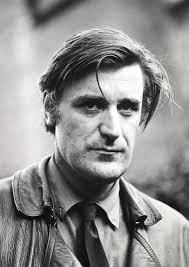 who (see above) admired Henry Williamson. Cambridge-educated Yorkshireman Hughes was fascinated by the natural violence of nature - in particular as regards the behaviour of animals - , in power and in death: